Peter Rejcek
  • Home
  • About
  • Articles
  • Gallery
  • Contact
Home About Articles Gallery Contact
Nanalyze • 5th February 2025

IBM's SaaS Saga: From Punch Cards to Platforms - Nanalyze

Remember the ship that got stuck in the Suez Canal a few years ago? Strong winds caused the massive vessel to run aground along the narrow waterway, blocking billions of dollars of goods from getting to their respective markets. Like a fat man trying to navigate an airplane aisle on a budget airline, the Ever Given was simply too overloaded to respond quickly enough to avoid getting stuck. The same could be said of big, bloated corporations like IBM (IBM), a stock that has been sinking under its...
19th January 2023

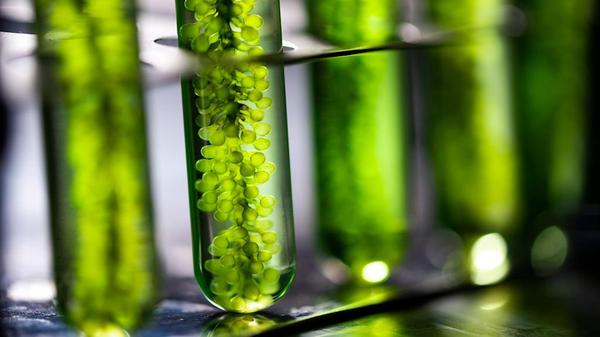
Microalgae could be the future of sustainable superfood in a rapidly changing world, study finds

The global population recently hit eight billion people. Yet climate change and human environmental impacts threaten our long-term food security. Researchers at the University of California, San Diego, recently published a scientific review demonstrating that microalgae and other microscopic, plant-like organisms could help feed the world’s growing population more sustainably than current agricultural systems.Algae. It’s what’s for dinner.This variation on the icon...
Frontiers Science News • 15th September 2022

Sharing a laugh: Scientists teach a robot when to have a sense of humor

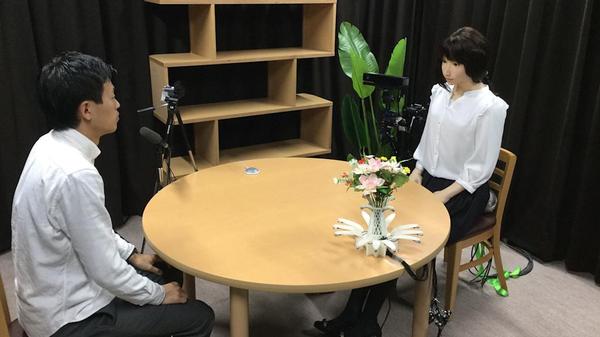
No one can really agree on what makes each of us laugh, so designing an artificial intelligence (AI) system with a sense of humor is enormously challenging. Researchers at Kyoto University laughed off the challenge by developing an AI that appropriately detects and responds to human laughter at a shared moment during a conversation. This shared-laughter model is another step toward creating more natural interactions between humans and robots.
Vitafoods Insights • 21st May 2020

Potential for Ayurveda to address pandemic

Can a medical system with thousands of years of history help combat a global pandemic in the 21st century?That’s a question the government in India is trying to answer, as it ramps up investigations into some of the most prominent healing herbs in Ayurveda to help combat SARS-CoV-2, the coronavirus that causes COVID-19.The Ministry of Ayurveda, Yoga & Naturopathy, Unani, Siddha and Homoeopathy (AYUSH) is the agency taking the lead on the government’s efforts to test the efficacy of certain herbs...
SingularityHub • 30th March 2020

The Top 100 AI Startups Out There Now, and What They're Working On

New drug therapies for a range of chronic diseases. Defenses against various cyber attacks. Technologies to make cities work smarter. Weather and wildfire forecasts that boost safety and reduce risk. And commercial efforts to monetize so-called deepfakes.What do all these disparate efforts have in common? They're some of the solutions that the world’s most promising artificial intelligence startups are pursuing.Data research firm CB Insights released its much-anticipated fourth annual list of th...
The Antarctic Sun • 31st December 2010

Stringing It Together

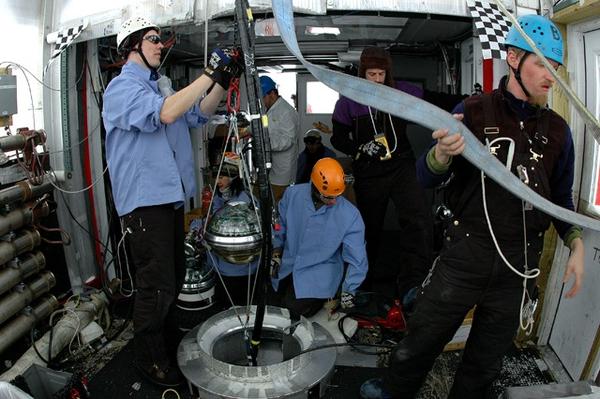
The conflicting emotions were palpable in the crowded drill tower where all eyes and cameras were on the basketball-sized instrument latched onto a cable. The shout “DOMs away” would send it and the rest of the 59 digital optical modules on the string deep into the ice sheet below the South Pole Station.

The command had been uttered hundreds of times since the IceCube Neutrino Observatory had sent its first string of detectors down a 2.5-kilometer-deep hole in the ice on Jan. 29, 2005.

But on Dec. 18, 2010 (local New Zealand time), there was an air of reluctance, even as the anticipation and excitement built. This was the 86th and final string deployment for the subglacial neutrino detector, marking the culmination of seven seasons of construction at the U.S. Antarctic Program’s southernmost research station.